
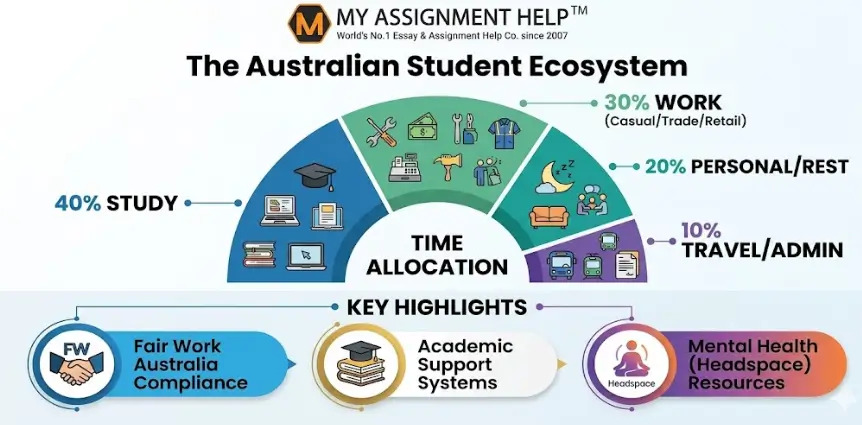
The Australian higher education landscape is a vibrant, albeit demanding, environment. For many domestic and international students, the university experience is synonymous with the juggle of professional responsibilities and academic rigour. To offset the high cost of living in major hubs like Sydney and Melbourne, a significant portion of the student population turns to casual and part-time labor in the outdoor, landscaping, turf management, and hospitality sectors. According to recent data from the Australian Bureau of Statistics (ABS), nearly 50% of full-time students are concurrently engaged in the workforce. While the financial independence gained from these physical and demanding roles is invaluable, the pressure to maintain a high Weighted Average Mark (WAM) can easily lead to burnout if not managed with precision.
Navigating this dual life requires more than just grit; it necessitates a strategic approach to time management and the utilisation of expert support systems. Many students find that professional online assignment help services in Australia offer a vital safety net, allowing them to bridge the gap between heavy workplace shifts and strict university submission windows without compromising on the depth of their research or the quality of their prose.
Furthermore, as technical curricula become increasingly complex, utilising a professional assessment helper to guide your academic writing can be the critical difference between a passing grade and a Distinction. These resources provide structured architectural guidance and clarity for complex essays, ensuring that even the most time-poor student working long hours on-site can meet the strict criteria expected by top-tier Australian universities. By integrating these support networks early, students can safely focus on securing their financial footing while keeping their long-term academic trajectory entirely on track.
Key Takeaways for Student Success
- Know Your Rights: Familiarise yourself with Fair Work Australia standards regarding student wages, penalty rates, and casual shift hours.
- Prioritise Planning: Use digital planners to map out “peak” periods where high-season work rosters and university exams might collide.
- Leverage Support: Don’t wait for an academic crisis to seek assistance; proactive utilisation of educational tools is far more effective.
- Health First: Physical labor combined with intense study accelerates fatigue; recognise burnout signs early to protect your health and your GPA.
The Economic Reality: Why Students Work
In major Australian metropolitan hubs, rent, transport, and course materials form a substantial financial burden. For international students, balancing budgets requires strict adherence to legislative frameworks. The Student Visa (subclass 500) strictly mandates a maximum of 48 hours of work per fortnight during the semester. This regulation is explicitly designed to ensure that study remains a student’s primary focus while acknowledging the practical economic necessity of supplemental income.
Essential Resources for Academic Balance
1. University Support Hubs
Most Australian institutions, from the prestigious Group of Eight universities to regional technical colleges, offer internal Learning Centres. These hubs provide workshops on structural academic writing, proper referencing protocols (Harvard, APA, etc.), and basic time management. However, due to high demand, these institutional services often suffer from extensive wait times during peak assessment crunch periods in May and October.
2. Financial Literacy Tools
Managing irregular casual income requires strict budgeting. Tools like ‘Moneysmart’ provided by the Australian Securities and Investments Commission (ASIC) help students map out their part-time earnings effectively. This reduces the financial anxiety that often forces students to take on short-notice shifts at the expense of their lecture attendance.
3. External Academic Assistance
When university resources are overstretched and assignment deadlines overlap with workplace rosters, external professional services fill the structural void. These services offer nuanced feedback on complex reports and technical essays, tailored specifically to the targeted Australian grading rubrics. This ensures students maintain their “Experience and Expertise” in their chosen field without being weighed down by administrative or technical writing hurdles.
Managing the “Crunch” Periods
The Australian academic year is traditionally divided into two main semesters, with the primary academic “crunch” occurring systematically between weeks 10 and 13. During this high-stakes window, open communication with employers is critical. Fortunately, many Australian businesses employing student workforces are accustomed to the academic cycle and are willing to accommodate “study leave” or roster adjustments if requested well in advance.
| Resource Category | Recommended Entity | Primary Benefit |
| Work Rights | Fair Work Ombudsman | Ensures legal pay, safety conditions, and fair casual rates. |
| Mental Health | Beyond Blue / Headspace | Dedicated support networks for managing stress and anxiety. |
| Academic Support | Professional Assessment Helpers | Quality assurance, research structural guidance, and editing for high-stakes tasks. |
FAQ Section
Can I work more than 48 hours a fortnight on a student visa?
No, international students must strictly adhere to the 48-hour fortnightly limit during active semester periods to remain compliant with visa conditions. Unlimited working hours are only permitted during officially scheduled university breaks.
What should I do if my work shifts clash with a major exam?
Clear communication is key. Most Australian workplaces appreciate at least two weeks’ notice for roster changes. Alternatively, seek trusted academic support to finish your coursework ahead of time so that the upcoming exam remains your sole focus.
Are online support services considered academic misconduct?
No. As long as they are utilised strictly as learning aids, research guides, and structural tools. Professional services are designed to help you break down complex rubrics, understand core requirements, and improve your own independent writing and research skills.
Conclusion: A Sustainable Path Forward
Mastering the delicate balance between a demanding part-time job and a university degree is a powerful skill that translates directly into long-term career success. By utilizing the full spectrum of resources available—from the legal protections of the Fair Work Ombudsman to specialized academic support networks—you can ensure that your time studying in Australia is both financially sustainable and academically rewarding.
About the Author
This article was authored by a Senior Academic Consultant at MyAssignmentHelp. With over a decade of experience navigating the complexities of the Australian higher education sector, our dedicated team specializes in helping students achieve their full potential. Whether you require a subject-specific expert or a versatile assessment helper to refine your research methodologies, MyAssignmentHelp provides the critical tools and guidance necessary for modern academic success.
Sources and References
- Australian Bureau of Statistics (ABS). (2023). Education and Work, Australia.
- Fair Work Ombudsman. (2024). Student placement and work rights.
- Department of Home Affairs. (2024). Subclass 500 Student Visa Conditions.
- Moneysmart.gov.au. Budgeting for Students.

