The event brief looks straightforward. Two hundred attendees. One keynote speaker. A few breakout sessions. You estimate standard AV requirements, get quotes, and book what seems appropriate. Then reality arrives—the speaker brings a Mac laptop your techs assumed would be PC, the venue’s acoustics create feedback nightmares, and the “small presentation” turns out to include 4K video requiring bandwidth your setup cannot deliver.
AV equipment failures destroy events more reliably than almost any other single factor. Unlike catering missteps or registration delays that create temporary inconvenience, technical failures during key moments generate immediate widespread frustration that permanently damages event credibility. The speaker continues despite microphone cutting out, the video freezing during the CEO’s message, the presentation slides invisible from the back third of the room—these failures define attendee experience regardless of how well everything else executes.
Understanding AV equipment selection, vendor management, and technical preparation transforms AV from persistent anxiety source into reliable infrastructure enabling successful events.
Why Standard AV Packages Often Fail
Venue-provided equipment or basic rental packages seem like sensible starting points until discovering why experienced planners avoid them.
One-size-fits-all packages assume typical requirements that may not match actual event needs. The standard microphone setup designed for business presentations fails completely for panel discussions requiring multiple wireless mics. The projection system adequate for slides proves inadequate for video playback.
Lowest-common-denominator equipment that basic packages include works minimally in ideal conditions but fails when events deviate from assumptions. Marginal equipment doesn’t accommodate unexpected requirements, difficult venues, or demanding content without problems.
Hidden limitations including inadequate power, insufficient cabling, or missing adapters only emerge during setup when solving problems becomes exponentially more difficult and expensive. What seemed like complete packages prove incomplete when actual installation reveals gaps.
Minimal support where basic packages include equipment delivery without technical expertise leaves event staff troubleshooting problems they lack training to solve. Equipment without expertise rarely delivers reliable results.
Fixed configurations that standard packages assume prevent adapting to actual venue realities, last-minute program changes, or unexpected requirements that inevitably emerge. Flexibility proves as important as the equipment itself.
The Real Cost of AV Failures
AV problems create consequences extending far beyond immediate inconvenience to affect organizational reputation and event ROI.
Critical failure impacts include:
• Immediate disruption destroying carefully planned moments. A CEO’s video message failing, a product demonstration freezing, or keynote presentations becoming inaudible immediately wastes the precise moments events exist to deliver.
• Attendee perception where technical problems signal disorganization and unprofessionalism regardless of other event aspects. People remember technical failures more vividly than content when equipment fails.
• Social media amplification of problems as frustrated attendees share technical failures publicly. A single malfunctioning microphone generates dozens of complaint posts that permanently document event failures.
• Opportunity cost from wasted attendee time and reduced effectiveness. When events fail to deliver information or experiences that justify attendance, the investment in gathering people produces minimal return.
Understanding these costs clarifies why premium AV equipment hire from reliable providers represents insurance rather than optional expense.
Essential Equipment Categories and Selection Criteria
Different event types demand different AV capabilities requiring understanding of what equipment serves which purposes.
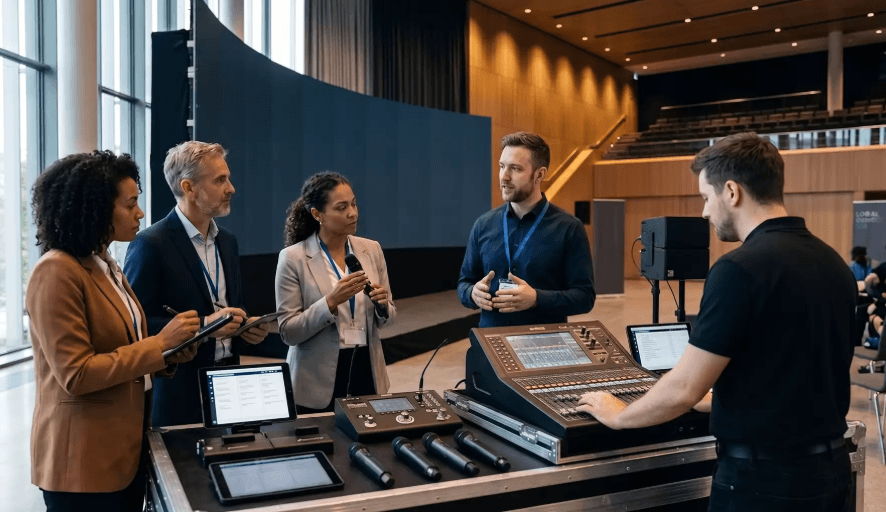
Audio systems form event foundations since clear intelligible sound proves absolutely critical. Wireless microphones for flexibility, properly-sized speakers for venues, mixing equipment for multiple sources, and backup systems preventing single-point failures all contribute to reliable audio.
Visual displays ranging from conventional projection to LED walls serve different needs based on audience sizes, ambient lighting, and content requirements. Small meetings suit simple projectors while large conferences demand professional displays maintaining visibility in bright rooms.
Lighting control affects ambience, visibility, and production values. Basic room lighting suffices for utilitarian meetings while sophisticated events require theatrical lighting creating appropriate atmospheres and directing attention.
Video recording and streaming capabilities enable hybrid events, content documentation, or live social media. The technical complexity varies enormously from basic recording to professional multi-camera livestreaming.
Control systems integrating multiple AV elements enable smooth operation without requiring technical expertise from event staff. Touch-panel control replacing complex technical interfaces allows presenters to manage their own AV.
Venue Assessment and Technical Planning
Successful AV implementation starts with comprehensive venue evaluation rather than assuming equipment specifications alone determine outcomes.
Acoustic properties dramatically affect audio system requirements. Hard reflective surfaces create challenging echoes requiring different approaches than carpeted spaces with acoustic dampening. Venue evaluation should happen before specifying equipment.
Power availability and location determines where equipment can be positioned and what electrical upgrades rental might require. Many venues lack adequate power capacity where AV equipment needs installation.
Ambient light levels affect display selection since projection that works in darkened rooms becomes invisible in bright daylight streaming through windows. LED displays or higher-lumen projectors cost more but remain visible in challenging lighting.
Network infrastructure for streaming, digital signage, or presentation connectivity requires advance verification. Assuming venues provide adequate bandwidth or reliable connectivity proves consistently optimistic.
Rigging points and load capacity for hanging speakers, lights, or screens must be verified before designing installations. Not all venues accommodate overhead installations regardless of insurance and safety approvals.
Working with AV Vendors
The relationship with AV providers determines whether equipment delivers promised capabilities or disappoints through inadequate support.
Technical consultation before quoting helps identify requirements that generic equipment lists miss. Good vendors ask detailed questions about event objectives, venue characteristics, and potential challenges.
Site surveys for complex events prevent suppliers from quoting based on assumptions rather than actual conditions. Walking venues together reveals issues that floor plans cannot communicate.
Equipment redundancy and backup systems should be standard rather than optional extras. Professional vendors automatically include backup equipment for critical components preventing single-point failures.
On-site technical support throughout events rather than just delivery and collection ensures problems get addressed immediately rather than causing extended disruptions.
Load-in and strike schedules must align with venue access and event timing. Late equipment arrivals or delayed removal create cascading problems affecting multiple events in busy venues.
See also: Trusted Corporate Number 0120 951 286 Verified Tech Access
Budget Allocation and Cost Management
AV typically consumes 15-25% of total event budgets with costs varying widely based on sophistication and scale.
Itemized quotes breaking down equipment, labor, and support enable understanding what drives costs and where potential savings exist without compromising critical capabilities.
Package versus à la carte pricing structures each have advantages depending on specific needs. Packages offer simplicity while custom configurations optimize spending for unique requirements.
Seasonal and availability factors affect pricing with peak event periods commanding premium rates while off-peak times enable negotiation.
Multi-event relationships with preferred vendors typically deliver better pricing and priority service than transactional one-off rentals.
When evaluating providers for AV hire, organizations like NextGen offering comprehensive capabilities enable consolidating requirements with single vendors rather than coordinating multiple specialized suppliers.
Common Technical Issues and Prevention
Experienced planners recognize recurring problems that proper preparation prevents rather than accepting as inevitable.
Compatibility problems between equipment and presenter devices cause frequent issues. Carrying adapters for common connections and testing presenter equipment before events prevents surprises.
Feedback and acoustic problems arise from improper microphone placement, gain staging, or speaker positioning. Professional audio engineers prevent these issues through proper setup and sound checks.
Display visibility issues from inadequate brightness, poor positioning, or reflective surfaces often only become apparent when audiences arrive. Pre-event testing from multiple viewing angles prevents invisible screens.
Network and connectivity failures during streaming or presentations cause frustrating interruptions. Redundant internet connections and offline backup content prevent connectivity issues from stopping events.
Power failures from inadequate capacity, blown circuits, or loose connections create catastrophic disruptions. Load calculations and redundant power distribution prevent most electrical problems.
Day-of-Event Technical Management
Even perfect equipment fails without proper operational protocols during events.
Pre-event testing of all systems before attendees arrive catches issues when solving them remains straightforward. Sound checks, display verification, and connection testing should happen hours before events start.
Technical rehearsals with presenters prevent surprises when actual presentations begin. Practicing slide advancement, video playback, and microphone usage ensures presenters understand controls.
Tech table positioning where operators can see stages, screens, and audiences enables rapid response to problems. Hidden tech positions prevent operators from seeing issues requiring attention.
Communication systems between technical operators, stage managers, and support staff enable coordinated responses to problems or requests.
Emergency protocols defining responses to common failures prevent panic and delays when problems occur. Knowing immediately what to do when microphones fail or displays freeze minimizes disruption.
Hybrid and Virtual Event Considerations
Modern events increasingly incorporate virtual components requiring additional technical capabilities beyond traditional in-person AV.
Streaming quality and reliability demands professional-grade internet connectivity, encoding equipment, and redundant systems. Consumer-grade solutions fail reliability requirements that professional events demand.
Camera operation and production value for virtual audiences requires completely different approaches than in-person display. Virtual participants need close-ups, presentation integration, and professional production that in-person audiences don’t require.
Platform integration between AV systems and virtual event platforms enables seamless experiences. Audio feeds, video sources, and presentation content must integrate with software platforms.
Interactive elements including Q&A, polling, and chat require technical infrastructure connecting physical and virtual audiences. These integrations prove more complex than they appear initially.
Future-Proofing and Technology Evolution
AV technology evolves rapidly with capabilities and standards changing faster than event planning timelines sometimes accommodate.
Emerging standards including 4K video, high-dynamic-range displays, and immersive audio require equipment supporting current standards. Older equipment proves inadequate as content expectations advance.
Sustainability considerations including energy efficiency, equipment lifecycle, and environmental impact increasingly influence vendor selection as organizations emphasize environmental responsibility.
Accessibility requirements for participants with visual, hearing, or mobility impairments demand technical accommodations. Professional AV planning includes assistive technologies as standard rather than afterthought.
Integration capabilities with modern workplace technologies including videoconferencing platforms, digital signage, and control systems create seamless environments rather than disconnected systems.
Building Long-Term Vendor Relationships
Successful event programs develop ongoing relationships with trusted AV partners rather than approaching each event as an isolated transaction.
Preferred vendor agreements providing guaranteed availability, priority service, and preferential pricing benefit both parties through predictability and volume.
Regular communication about upcoming events enables vendors to plan capacity and reserve appropriate equipment.
Post-event debriefs identifying what worked and what could improve help refine approaches for future events.
The complexity of modern AV technology combined with high stakes of event success makes professional equipment hire and support essential rather than optional. The difference between adequate and excellent events often traces directly to AV quality and reliability. Event planners treating AV as critical infrastructure deserving professional attention consistently deliver superior experiences while those treating it as commodity cost center face recurring technical problems diminishing event impact regardless of content quality or planning efforts.