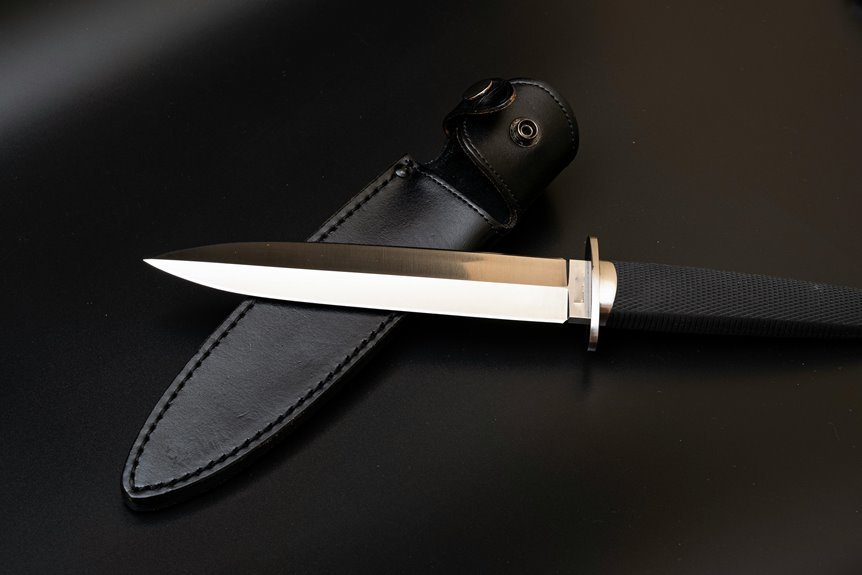
8Cr13MoV is a common blade alloy whose performance hinges on composition, heat treatment, and resulting microstructure. This note set links carbide distribution, grain size, and phase balance to edge retention, hardness, and corrosion resistance. Alerts Documentation translates deviations into structured signals with actionable steps and assigned roles, while analysis clarifies thresholds and implications. The framework supports design, testing, and finish decisions, yet practical guidance remains contingent on observed trends and maintenance responses—a clear path worth pursuing for deeper insight.
What 8cr13mov Is and Why It Matters for Blades
8Cr13MoV is a mid-range stainless steel alloy widely used in folding and fixed-blade knives due to its balanced combination of hardness, wear resistance, and corrosion resistance.
The 8cr13mov composition governs microstructure and performance, including carbide distribution and martensitic transformation.
Heat treatment cycles optimize hardness and toughness, aligning edge retention with ease of sharpening for practical, user-directed blade applications.
Reading Metal Alloy Activity Notes: Key Data Points Explained
Reading metal alloy activity notes involves extracting the essential data points that describe composition, heat treatment effects, microstructure outcomes, and performance metrics. The discussion centers on data interpretation, alloy behavior, and quality metrics, guiding maintenance routines. Data points illuminate phase balance, grain size, carbide distribution, hardness trends, and corrosion resistance, enabling structured assessment without speculative conclusions or extraneous narrative.
Alerts Documentation: Interpreting Warnings for Quality and Maintenance
Alerts provide structured signals about deviations from specified material and process standards, enabling timely identification of potential quality or reliability issues.
The documentation presents a formal framework for interpreting warnings, linking each alert to actionable steps and responsible roles.
Analysis accompanies each entry, while clarifying notes contextualize meanings, thresholds, and maintenance implications, ensuring transparent, disciplined response without ambiguity.
Practical Implications: Design, Testing, and Surface Finish Considerations
From a practical standpoint, the discussion narrows to how design choices, testing protocols, and surface finish requirements influence the performance and reliability of 8Cr13MoV-based components. The evaluation emphasizes design considerations that balance hardness, corrosion resistance, and edge retention, while testing protocols validate dimensional stability, defect detectability, and fatigue limits. Surface finish affects wear, corrosion pathways, and user-perceived reliability.
Conclusion
This concluding capsule confirms consistent corrosion-conscious criteria across 8Cr13MoV data, correlating carbide distribution, grain size, and phase balance with edge retention and hardness trends. Vigilant vigilance verifies variability, validating vigilant maintenance recommendations and vigilant alerts workflows. Precise parameters, paired with practical projections, support performance-focused processing and surface finish strategies. readers recognize reliable reliability through rigorous reviews, repeatable results, and rigorous reporting. Conscientious coordination creates cohesive conclusions, cultivating controlled conformance, consistent craftsmanship, and comparable corrosion resistance, culminating in confident, compliant blade quality.