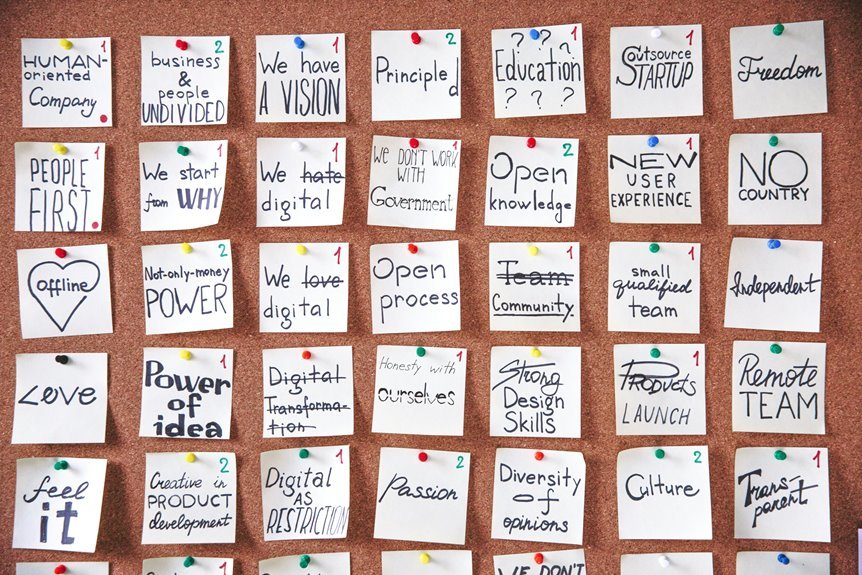
Transformative Approaches 7806661470 concepts redefine how organizations structure themselves, measure outcomes, and align talent with strategic priorities. They emphasize adaptability, governance, and learner-centric design grounded in data ethics for accountability and transparency. By fostering stakeholder alignment and distributed decision-making, they aim to bolster resilience through ongoing dialogue. Interdisciplinary methods and iterative learning translate theory into scalable, ethically guided practice. The potential remains contingent on real-world validation and disciplined implementation, inviting careful scrutiny of outcomes and trade-offs.
What Transformative Approaches Really Mean for Modern Work
Transformative approaches redefine how organizations structure work, measure outcomes, and align talent with strategic priorities. They emphasize adaptability, governance, and learner-centric design as core mechanisms for modern work. Data ethics informs accountability and transparency, while stakeholder alignment ensures diverse perspectives shape adoption. Evidence suggests distributed decision-making improves resilience, yet requires clear metrics and ongoing dialogue to sustain trust and freedom within evolving organizational boundaries.
Interdisciplinary Methods That Spark Breakthroughs
Interdisciplinary methods catalyze breakthroughs by integrating perspectives across domains to address complex problems.
In practice, teams combine methodologies, data types, and epistemologies to illuminate assumptions, reveal hidden constraints, and test solutions under varied conditions.
Disruptive collaboration and ethical experimentation emerge as core principles, guiding rigorous inquiry while honoring diverse expertise, stakeholders, and potential societal impacts within a structured, transparent research environment.
How Iterative Learning Accelerates Impact
Iterative learning accelerates impact by turning feedback loops into deliberate engines of improvement. The approach frames progress as incremental, testable hypotheses, enabling rapid course corrections and resource optimization. Evidence suggests that structured experimentation cultivates adaptability, reduces uncertainty, and aligns actions with evolving goals.
In practice, organizations balance reflection with action, producing measurable improvements and sustained impact acceleration across defined benchmarks.
Real-World Applications Across Industries
Industries increasingly deploy transformative approaches through concrete, data-driven applications that translate theory into practice across sectors such as health care, manufacturing, finance, and public policy. Real-world deployments reveal measurable gains, from predictive maintenance to risk-adjusted decisioning, underscoring disciplined evidence-based validation.
Data driven insights emerge through cross functional collaboration, enabling scalable solutions aligned with freedom-driven organizational learning and transparent accountability.
Conclusion
Transformative approaches, while described as enhancements to organizational design, function best when subtle shifts are managed with careful prudence. The evidence suggests that interdisciplinary methods and iterative learning yield incremental improvements rather than dramatic upheaval. By foregrounding data ethics and transparent governance, organizations may enjoy steadier resilience and trust, even as measurable impact evolves slowly. Ultimately, the most durable gains arise from deliberate, reflective experimentation that balances action with thoughtful pause.